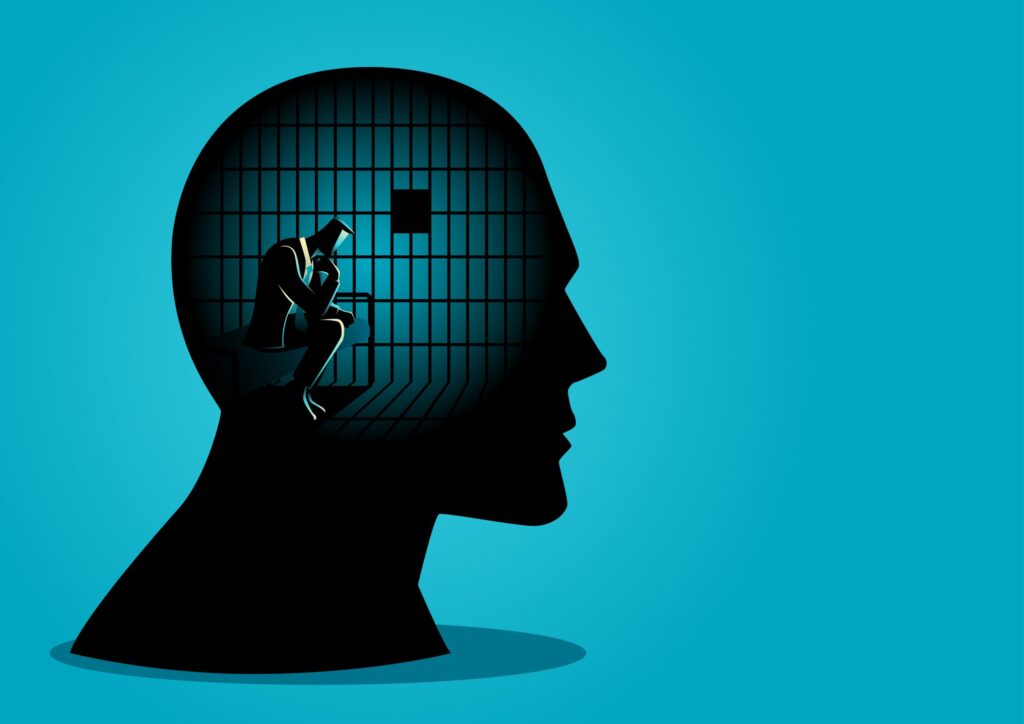
Every year, millions of people in the United States are affected by mental illness. It’s critical to quantify the prevalence of mental illness better to comprehend its medical, social, and financial consequences and demonstrate that no one is alone. It is important to have effective instruments for increasing public awareness, break down stigma, and push for better healthcare. Mental illnesses are caused by problems with the human brain. Scientists have discovered a wide range of mental disorders and their treatments over time. Most people suffer from a variety of mental illnesses as a result of the constant pressures of work and stress. These illnesses range from mild to severe, and in some cases, they grow so severe that life becomes unbearably difficult. The following are some examples of mental disorders: ANXIETY DISORDER When a person begins to respond inappropriately to particular individuals, objects, or locations, such as being extremely afraid, sweating, rapid heartbeat, irregular breathing, and anxiousness; this is concerning for anxiety disorder. Excessive anxiety about many elements is described as a result of prior experiences such as distressing incidents, abuse, financial issues, or the death of a loved one. Anxiety frequently leads to depression, panic attacks, post-traumatic stress disorder, obsessive-compulsive disorder, and other symptoms. Through telemedicine, patients are able to access healthcare from the comfort of their own home. Medications are sometimes prescribed to help regulate their emotions and bodily reactions to live a stable life PERSONALITY DISORDER These are persistent psychiatric illnesses that have a significant impact on a person’s life. It is associated with inadequate coping abilities, shown in workplaces or social connections with others. For example, suppose a person believes that everything and everyone is against him or her and that reality is terribly unpleasant. In that case, he or she has no desire to socialize with other people, infringes others, abuses or harms others or himself, or believes that he or she is incapable of doing anything PSYCHOTIC DISORDERS Psycotic disorders include illnesses such as schizophrenia and bipolar disorder. These are mental illnesses in which the individual looses contact with his or her environment. This disease has a significant impact on the psyche. Patients suffering from this condition have delusions and hallucinations. Delusion is the unshakable belief in things that are not true or have been proven false. On the other hand, a hallucination is when you see or hear things that are not real. These are sensations encountered by the senses, not ideas of a person. Other signs include unusual speech or behavior, mood swings, poor interpersonal connections, and so forth. STATISTICS The National Institute of Mental Health Disorders, which is part of the National Institutes of Health, has released the most recent statistics:Major depression (also known as clinical depression), manic depression (formly known as bipolar disorder), schizophrenia, and obsessive-compulsive disorder are the leading causes of disability in established market economies such as the United States. In any given year, an estimated 26 percent of Americans aged 18 and older – almost one in every four individuals – have a diagnosable mental illness. Many people have more than one mental illness at the same time. Depressive diseases, in particular, are more likely to co�exist with drug misuse and anxiety disorders. Every year, around 9.5 percent of Americans aged 18 and above suffer from a depressive illness (major depression, bipolar disorder, or dysthymia). Women are roughly twice as likely as males to have severe depression. Bipolar disorder, on the other hand, affects both males and women equally. While severe depression can strike at any age, the usual onset age is in the mid-20s. In the case of bipolar disorder, which affects roughly 2.6 percent of adult Americans each year, the typical age at the start of the first manic episode is in the early twenties. A diagnosable mental disease causes most suicides, most frequently a depressive disorder or a drug addiction problem. Men commit suicide at a rate four times that of women. Women, on the other hand, attempt suicide at a higher rate than males Depression Adult depression has become quite prevalent in the United States. Depression may be classified into three levels: mild depression, moderate depression, and severe depression. According to research, one out of every four women and one out of every ten men would experience depression at some point in their Life. Loneliness, suicidal thoughts, lack of food, loss of sleep, low energy, chronic sorrow, and other symptoms are all connected with adult depression. the severity of the illness determines the number of symptoms that the patient may encounter. Most patient will become persuaded that something terrible is about to happen to them, such as a terminal sickness or poverty. According to recent studies, between 6% – 19% of the population will experience severe depression at some point in their lives. Although there is no obvious recognized cause of depression, many researchers believe it is a biological condition. The illness arises for no obvious reason, for example, without any lifestyle changes; the condition tends to run down the family tree, and it can be treated with medications and therapy in most conditions.. Depression is a dangerous illness that must be treated immediately. It can have serious consequences if not addressed. It can disrupt your social life, work, and family relationships, as well as your feeling of self-purpose and self-worth. Many variables have been identified as potential causes of depression. Some of the causes are as follows: alcoholism, seasonal changes, physical/hormonal changes, traumatic experiences, hypothyroidism, stroke, and heart attack. How to Diagnose Depression There is no clinical test that can be used to identify whether or not a patient is depressed. The symptoms experienced by the patient, the length of time the patient has had the symptoms, and how the symptoms have impacted the patient’s life are all factors in making a diagnosis. Blood tests may be performed as well, but solely to rule out other diseases that cause similar symptoms. Anxiety Anxiety disorder affect 13-18% of the general population, although